Terminales, pasajeros y resignificación de los lugares en Maracaibo
el cine documental de Yanilú Ojeda
Palabras clave:
terminales de pasajeros, cine documental, desplazamientos, identidadesResumen
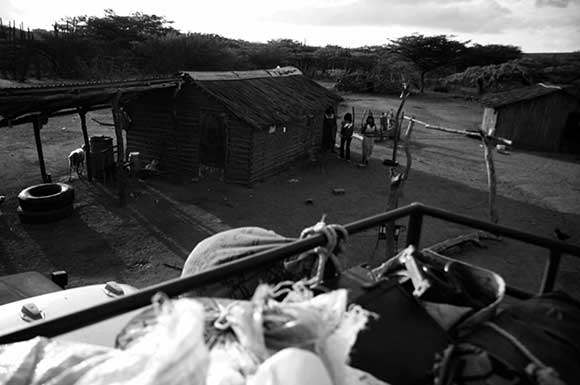
A través del análisis de los documentales El terminal de pasajeros (2006) y Shawantama’ana: Lugar de espera (2012), de la realizadora venezolana Yanilú Ojeda, se abordan las dinámicas de desplazamiento, interacción con el espacio urbano así como la resignificación de los no lugares que llevan a cabo los sujetos en dos Terminales de pasajeros de Maracaibo, Venezuela, caracterizada como ciudad-región o ciudad fronteriza, por su cercanía y vínculos con Colombia y su diversidad cultural, evidenciada tanto por la presencia indígena de la etnia Wayuu como por inmigrantes colombianos (Zacarías, Guillén y Chourio, 2007). El análisis gira también en torno a reflexiones teóricas de James Clifford y Marc Augé sobre los desplazamientos y la correlativa significación antropológica de los lugares, así como sobre los procesos de hibridación y heterogeneidad cultural, según Antonio Cornejo-Polar y Néstor García Canclini. Se contextualizan las obras estudiadas en el marco del reciente cine venezolano de temática indígena, así como del llamado Cine del Tercer Mundo y sus particulares implicaciones dentro del contexto sociopolítico venezolano (Arreaza y García, 2009). A pesar de la vulnerabilidad de sujetos socialmente al margen en esos Terminales así como de su invisibilización frente a los discursos dominantes, las películas muestran relaciones muy dinámicas tanto en la movilización como en la resignificación cultural y social de las identidades y los lugares.
Descargas
Citas
Arreaza, E. y García, Í. (2009). “Documentales venezolanos de temática indígena”. Ponencia presentada en el XXVIII Congress of the Latin American Studies Association. Río de Janeiro, Brasil, 11-14 junio.
Augé, M. (2000). Los no lugares: Espacios del anonimato. Una antropología de la sobremodernidad. Barcelona, España: Gedisa.
Balza, M. (2007). Epílogo: Una ciudad silenciosamentemulticultural. En W. Niño Araque (Curador), Maracaibo cenital. (pp. 282-283). Caracas, Venezuela: Editorial Arte.
Barthes, R. (1987). El susurro de la lengua. En El susurro del lenguaje. (pp. 99-102). Barcelona, España: Paidós.
Clifford, J. (1999). Itinerarios transculturales. Barcelona, España: Gedisa.
Cornejo-Polar, A. (1996). Una heterogeneidad no dialéctica: Sujeto y discurso migrantes en el Perú moderno. Revista Iberoamericana. Vol. XVII, N°176-177, 837-844.
Coronill, F. (2002). El Estado mágico. Caracas, Venezuela: Nueva Sociedad.
García Canclini, N. (1990). Culturas híbridas. México DF, México: Grijalbo.
García Canclini, N. (2003). Noticias recientes sobre hibridación. TRANS-Revista Transcultural de Música 7 - Artículo 2. Recuperado el 14/09/2011.
Pérez, L. (2004). Los wayuu: tiempos, espacios y circunstancias. Espacio Abierto. Vol. 13 N°4, 607-630.
Pérez, L. (2005). Marakaaya: lugares y recorridos wayuu. Maracaibo, Venezuela: Facultad Experimental de Ciencias, Universidad del Zulia (inédito).
Perrin, M. (1997). Los practicantes del sueño: El chamanismo wayuu. Caracas, Venezuela: Monte Ávila.
Suárez Urariyu, L. (2007). Tejiendo sueños y palabras. Barranquilla, Colombia: Casa Editorial Antillas.
Vargas Llosa, M. ([1977] 1997). La tía Julia y el escribidor. Barcelona, España: Seix Barral.
Zacarías, F., Guillén, E. y Chourio, G. (2007). Maracaibo: de la noción de ciudad intermedia a espacio territorial de flujos continuos. En W. Niño Araque (Curador), Maracaibo cenital. (pp. 36-45). Caracas, Venezuela: Editorial Arte.