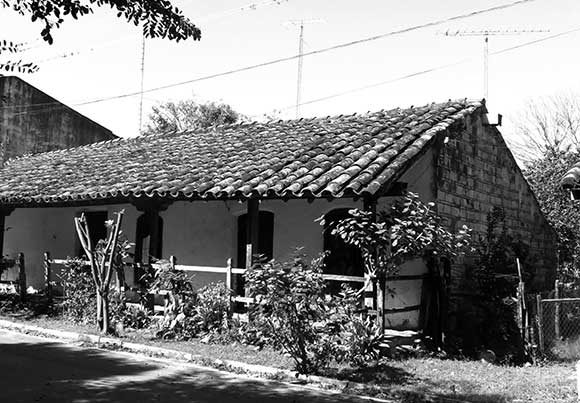
Earth construction in rainy climates
Developments of the colonial and independent period in the basins of Paraguay, Paraná and Uruguay rivers
Keywords:
very heavy rains, water, pathologies, protection, earth construction techniquesAbstract
This essay tries to establish the relationship between the settlers of the old province of Paraguay in the time of the colonization and the use that they made of the earth as a construction material. The Guaraní people handled wattle and daub and the Europeans, settlers and clergy, contributed with adobe and rammed earth. In relation to the sites where the different groups were located, the area of the colony, the missions and finally the forest were identified. That occupation is visualized today based on the architecture of earth of each region and city.
The purpose is to analyze the pathologies generated by very heavy rains and to observe the developments made in the region. It is possible and desirable, at the criteria of the author, to protect the areas affected by the undesired contact with the water, so that their maintenance is not affected in a nearly time by pathologies.
Downloads
References
De Azara, F. (1904). Geografía física y esférica de las provincias del Paraguay y Misiones guaraníes. Asunción, Paraguay: Edición Biblioteca Nacional de Montevideo. Recuperado de: http://www.arquitectura.com/arquitectura/monografias/global1/global1.asp
Gutiérrez, R. (arq.)([1983] 2010). Historia de la Arquitectura del Paraguay 1537-1911. Asunción, Paraguay: Ed. Ramón Gutiérrez y Municipalidad de Asunción.
Herreros, J.; Laracastro, F.; Morra, C.; Ríos, S. y Romero, S. (1984). La Culata Yovai. Asunción, Paraguay: Editorial Centro Paraguayo de Estudios Sociológicos.
Koenigsberger, O. y otros (1977). Viviendas y edificios en zonas cálidas y tropicales. Madrid, España: Editorial Paraninfo.
Melià, B. (1993). El Guaraní conquistado y reducido. Ensayos de etnohistoria. Biblioteca Paraguaya de Antropología, Vol. 5. Asunción, Paraguay: Editorial Centro de Estudios Antropológicos de la Universidad Católica (CEADUC).
Metraux, A. (1928). La Civilización material de las tribus Tupí-Guaraní. París, Francia: Librería Orientalista Paul Geuthner.
Pastore, C. (2013). La lucha por la tierra en el Paraguay. Asunción, Paraguay: Editorial Intercontinental.
Rengger, J. R. (1835). Reisenach Paraguay in den Jahren 1818 bis 1826.Aarau, Suiza: Edición H.R. Saverlaender.
Rengger, J. R.; Tomasini, A. y Braunstein J. (2010). Viaje al Paraguay en los años 1819 a 1826. Asunción, Paraguay: Editorial Tiempo de Historia.
Ríos Cabrera, S. (2016). La vivienda guaraní. Aproximación a la vivienda guaraní en las cuencas de los ríos Paraguay, Paraná y Uruguay. En serie Cuadernos de Arquitectura, N.° 8. San Lorenzo, Paraguay: Facultad de Arquitectura, Diseño y Arte de la Universidad Nacional de Asunción (UNA).
Ríos Cabrera, S.; González, M. G. y Gill Nessi E. ([2009] 2016). Arquitectura + Patrimonio en Tierra del Paraguay. Serie Cuadernos de Arquitectura, N.° 3. San Lorenzo, Paraguay: Facultad de Arquitectura, Diseño y Arte de la Universidad Nacional de Asunción (UNA).
Schmiedl, U. (2009). Viaje al Río de la Plata. Buenos Aires, Argentina: Editorial Claridad.
Sepp, A. (2009). Los relatos del viaje y de la misión entre los guaraníes – Diario del P. Antonio Sepp. Asunción, Paraguay: Editorial Parroquia San Rafael.
Staden, H. (1945). Viajes y cautiverio entre Caníbales. En E. Fernández (Trad.), Colección Viajeros de las Américas. Buenos Aires, Argentina: Editorial Nova.
Susnik, B. (2008). El rol de los indígenas en la formación y en la vivencia del Paraguay. Asunción, Paraguay: Editorial Intercontinental.
Sustersic, B. (2004). Templos jesuítico-guaraníes. Buenos Aires, Argentina: Facultad de Filosofía y Letras, Universidad de Buenos Aires.
Viñuales, G. M. (2009). Restauración de arquitecturas de tierra. Edición digital del Centro de Documentación de Arquitectura Latinoamericana (CEDODAL). Recuperado de: https://issuu.com/cedodal/docs/restauracion_de_ arquitecturas_de_tierra